
Ven. Ñāṇavimala was ordained in Sri Lanka in 1955. After twelve years of study and meditation at Island Hermitage, he set out bare-footed on continuous walking tour. These are recollections of some of his teachings by a former disciple.
BWV 002: True Cultivation

This verse is a well-known summary of the teaching, given by all the Buddhas. In some of the Dispensations it replaced the more detailed teaching found in the Rules of Discipline (Vinaya).
Flip-book, pdf and audio files of Pain, Stress and Illness by Bhikkhu Sumedha

A pdf copy of Bhikkhu Sumedha’s work A Buddhist Perspective on Pain, Illness and Stress for anyone to download and print out for themselves.
BWV 001: One should be Amenable to Admonition

Two Kings renounced the world and lived as ascetics. One day they fell into a quarrel about who should admonish the other.
Light on Pāḷi Pronunciation by Ledi Sayadaw
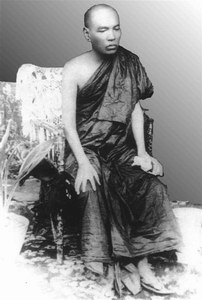
A translation of the first eight of the explanations in the Niruttidīpanī by Ledi Sayadaw, which deal with the sound-system and pronunciation in Pāḷi.
Conversion of Ancient Buddhist Texts to Unicode

Over the past couple of weeks I have made a new Unicode font and I have now converted the whole of the Ancient Buddhist Texts website to this format.
Mount Kailash, A Pilgrim’s Companion

A short book by Ven Dhammika as a companion to Mount Kailash has now been published on the Photo Dharma website, with extra photographs he took along the way.
The Fourteen Guidelines of Engaged Buddhism

Thich Nhat Hanh has always been one of my true Buddhist heroes and the quintessential teachings are contained in these guidelines, which were first formulated during the Vietnam War.
Emptiness in the Visuddhimagga

Here are some interesting verses on Emptiness from the 5th century meditation manual Visuddhimagga by Bhandanta Buddhaghosa.
Gary Snyder: Buddhist Anarchism

Buddhism holds that the universe and all creatures in it are intrinsically in a state of complete wisdom, love and compassion; acting in natural response and mutual interdependence.
Buddhist Wisdom Verses: Eight things Leading to Prosperity

To give a taste of what my new book Buddhist Wisdom Verses is like I include one of the 251 sections today. I include here also a reading of the text. These make for very good meditative reflections of the teaching, and you can see how they apply to yourself.
The Traditional Life of Aśvaghoṣa

According to the traditional biography of Aśvaghoṣa, which was translated into Chinese by Kumārajīva, he was originally a wandering ascetic who was able to defeat all-comers in debate.
J.K. Nariman: Aśvaghoṣa and the Buddhacarita

Here is a re-edited short appreciation of the Buddhacarita by Aśvaghoṣa by J.K. Nariman, which can be found in full on my Ancient Buddhist Texts website.
The Bases for Talk
Here is a short discourse that is well worth time considering as it deals with right and wrong sorts of talk. You can use it as a kind of measure of your own concerns and ask yourself: are they in line with Dhamma or with adhamma?
Dr K Sri Dhammananda: The Buddhist Explanation of Natural Disasters

Human beings possess the intelligence and wisdom to question their existence, how and why they are born in this world and about the meaning of life itself.
The Heart Sutra recited by Marina Lighthouse

This is a beautiful recitation of a translation of the Heart Sūtra by Marina Lighthouse, along with some atmospheric black and white photographs from Borobudur and elsewhere.
Naḷinikā’s Story
The story is an interesting, if highly improbable, fable: a sage lives alone in the Himālayas, there is semen in the urine he passes, and a deer who happens to eat the grass in that place gets pregnant from it.
Days, Months and Seasons in Pali
The Buddhist calendar calculations are based on the Lunisolar year. Important dates (like the Awakening) being commemorated on the Moon cycle, and the Moon cycle itself being adjusted to fit in with the Solar cycle.
Episodes from the Life of the Buddha 2: The Invitation
Every second week, with the waxing and the waning of the moon Buddhist monks hold the uposatha meeting. If there are enough monks available then we will confess our offenses and the Pātimokkha will be chanted by one of the monks, while we sit together in unison.
